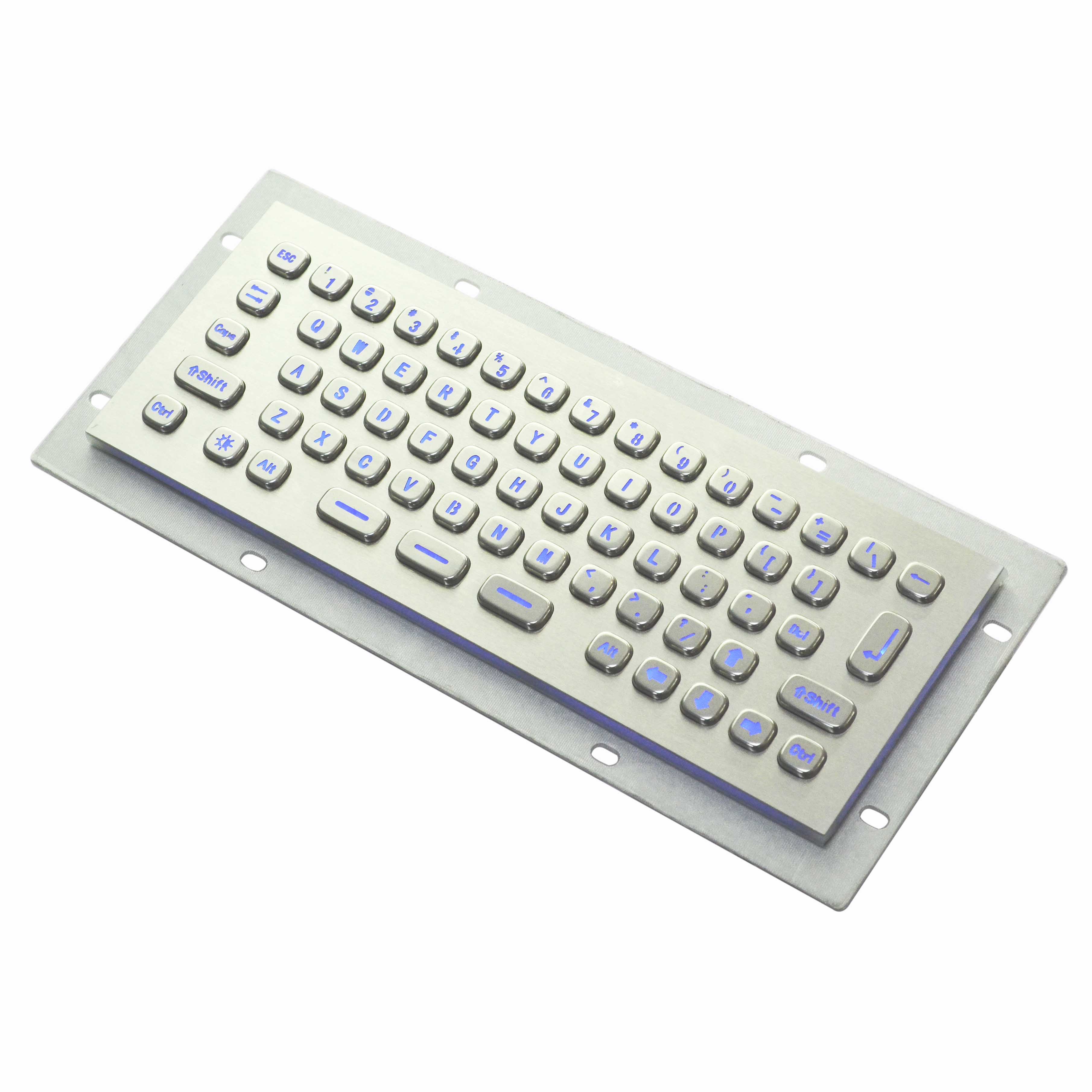
What is Medical keyboard?
author: Linsa
2025-12-22
The medical keyboard is a specialized type of input device designed specifically for use in healthcare environments. Unlike standard keyboards, medical keyboards are designed to meet the stringent
requirements of cleanliness, durability, and ease of use in clinical settings. Design Features Antimicrobial Coating: Many medical keyboards feature an antimicrobial coating to inhibit the growth of bacteria and
other microorganisms, reducing the risk of infection transmission. Water and Dust Resistance: These keyboards are typically constructed with materials that are resistant to water and dust, ensuring they can
withstand frequent cleaning and exposure to various environmental conditions. Functional Benefits Durability: Built to withstand the rigors of a healthcare environment, including frequent cleaning and
disinfection. -Ease of Cleaning: Simplified design with fewer crevices and seams, making it easier to clean and maintain. Customization: Some models offer customizable key functions and layouts to suit specific
clinical needs. Applications Medical keyboards are used in various healthcare settings, including hospitals, clinics, laboratories, and pharmacies. They are essential for tasks such as patient data entry, medical
record management, and device control. The Future Development Prospect of Medical Keyboards With the rapid development of medical technology, medical keyboards have become an important part of
medical equipment. The medical keyboard not only meets the requirements of medical hygiene, but also has the functions of data input, transmission, and processing, which greatly improves the efficiency and
accuracy of diagnosis and treatment. In the future, with the popularity of artificial intelligence and the further development of big data, medical keyboards will continue to be optimized and upgraded. One
possible development direction is to add more sensors to the keyboard, which can capture various physiological data of patients, such as temperature, heartbeat, and blood pressure. This information can be
transmitted in real time to the monitoring system, which can provide doctors with more accurate and comprehensive health information about patients. Another direction is to enhance the security of medical
keyboards, by developing encrypted communication protocols and intelligent authentication methods. This can prevent unauthorized access and protect patients' personal information and medical data.
Additionally, with the growth of telemedicine, medical keyboards are likely to become more portable and wireless, enabling doctors to provide remote medical consultations and treatments. In conclusion,
medical keyboards have a promising future, and their development will continue to contribute to the improvement of medical care. How to choose a good medical keyboard? here are some tipsr choosing a
good medical keyboard: 1. Durability: A medical environment is often busy and fast-paced, so it's important to choose a keyboard that is durable enough to withstand heavy usage. Look for keyboards that are
made of high-quality materials and are built to last. 2. Cleanliness: In any medical environment, hygiene is of utmost importance. Choose a keyboard that is easy to clean and disinfect, with a smooth surface that
doesn't have hard-to-reach nooks or seams. 3. Ergonomics: Medical professionals spend a lot of time typing, so it's important to choose an ergonomic keyboard that is comfortable to use for long periods. Look
for a keyboard with a comfortable wrist rest and keys that are well-spaced and easy to press. 4. Compatibility: Before purchasing a medical keyboard, ensure that it is compatible with your computer or device.
Some keyboards may require special drivers or software to function properly. 5. Features: Consider whether you need any additional features, such as programmable hotkeys or backlighting. These can be useful
in a medical setting where time is of the essence and every second counts.
Shenzhen Keyu officially launched its new silicone key metal keyboard.
Keyu independently developed a wireless metal keyboard, which is faster and reaches farther.
Related Article
Stainless Steel Braille Keyboard: Forging a Barrier-Free Digital Path with Precision and Durabilit
Stainless Steel Braille Keyboard: Forging a Barrier-Free Digital Path with Precision and Durability
This article mainly analyzes the differences and characteristics between ordinary mouse and trackball mouse.
The core difference between ordinary mouse and trackball mouse
The 304 stainless steel RS485 keyboard is a rugged industrial input device, featuring corrosion-resistant 304 stainless steel construction for harsh environments. Equipped with an LCD display (supporting custom multi-language), LED backlit keys, and RS485 communication (customizable protocol, long-distance transmission up to 1200m), it ensures durability, easy cleaning, and seamless integration.
The Ultimate Guide to 304 Stainless Steel RS485 Keyboard: Durability, Customization, and Industrial Excellence