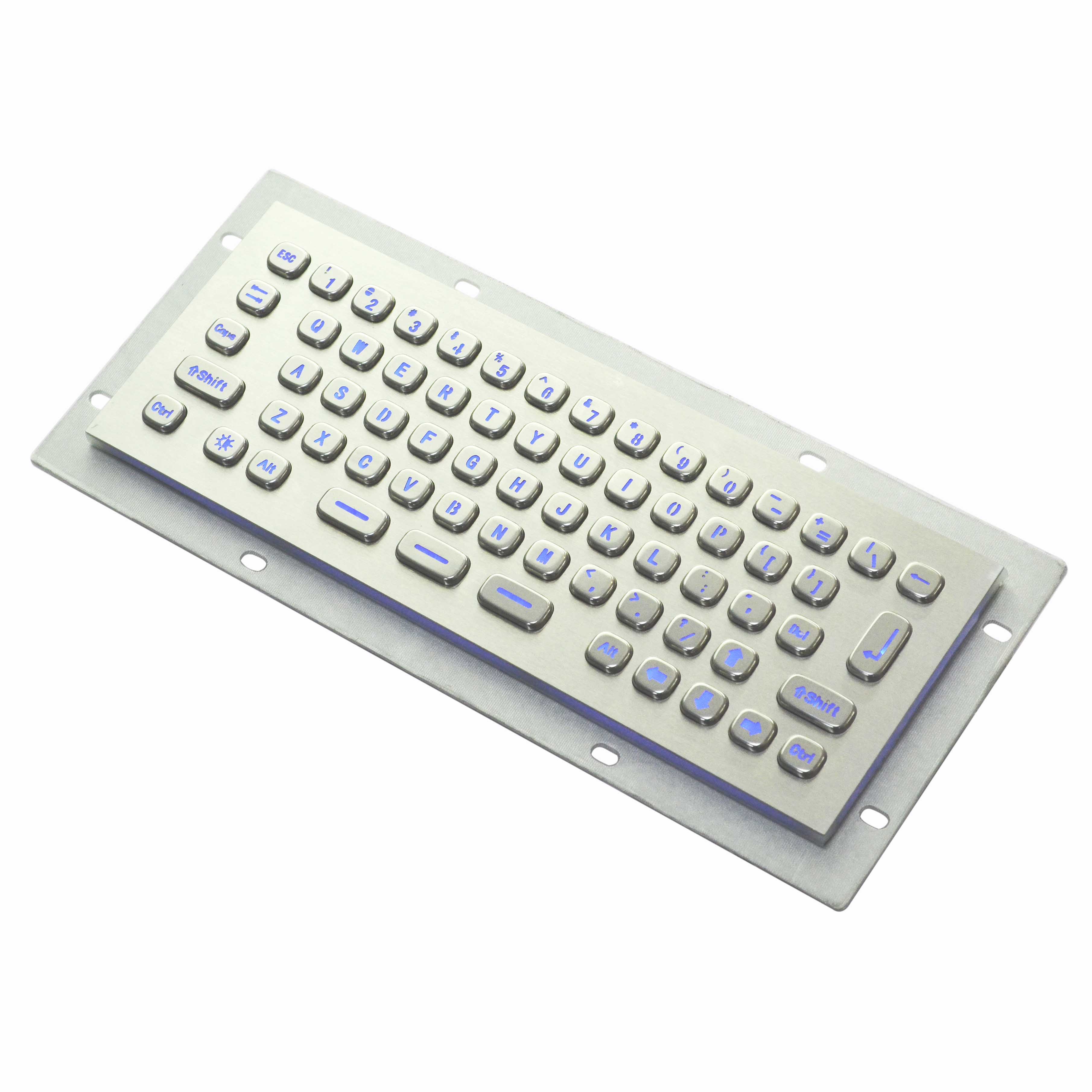
The Ultimate Guide to 304 Stainless Steel RS485 Keyboard: Durability, Customization, and Industrial Excellence
author: marksu
2026-05-13

In the fast-paced world of industrial automation, control systems, and harsh environment operations, the choice of input devices can make or break operational efficiency, reliability, and long-term cost-effectiveness. While standard office keyboards are designed for comfort and convenience in controlled indoor settings, industrial environments demand a higher standard—one that combines ruggedness, adaptability, and seamless connectivity. Enter the 304 stainless steel RS485 keyboard: a purpose-built input solution that addresses the unique challenges of industrial, outdoor, and high-demand applications. From its corrosion-resistant 304 stainless steel construction to its customizable LCD display, LED backlit keys, and flexible RS485 communication, this RS485 keyboard is engineered to deliver consistent performance where ordinary keyboards fail. In this comprehensive guide, we’ll explore every aspect of this exceptional RS485 keyboard, explaining why it’s become a cornerstone of modern industrial operations and how its features can elevate your system’s functionality.
First, let’s start with the foundation of this RS485 keyboard’s durability: its 304 stainless steel construction. When it comes to industrial-grade equipment, the material choice is non-negotiable—and 304 stainless steel stands out as the gold standard for rugged input devices like the RS485 keyboard. Unlike plastic or low-grade metal keyboards that degrade quickly under harsh conditions, the 304 stainless steel used in this RS485 keyboard offers a unique combination of strength, corrosion resistance, and hygiene that makes it ideal for even the most demanding environments. This alloy contains 18% chromium and 8% nickel, creating a protective oxide layer on its surface that prevents rust, corrosion, and damage from chemicals, moisture, and extreme temperatures. Whether your RS485 keyboard is installed in a food processing plant where frequent cleaning with harsh sanitizers is required, an outdoor kiosk exposed to rain and humidity, a manufacturing facility with dust and debris, or a marine environment with saltwater exposure, the 304 stainless steel construction of the RS485 keyboard ensures longevity and consistent performance.
Beyond corrosion resistance, 304 stainless steel provides exceptional mechanical durability for the RS485 keyboard. Industrial settings are often high-traffic, with frequent use, accidental impacts, and even intentional tampering—all of which the RS485 keyboard is built to withstand. This RS485 keyboard’s stainless steel panel and keys are designed for heavy-duty use, with a key life of over 2 million operations per key—far exceeding the lifespan of standard consumer-grade keyboards. The surface of the RS485 keyboard is typically treated with a brushed finish, which not only enhances its aesthetic appeal but also reduces fingerprints, smudges, and glare, ensuring visibility even in bright lighting conditions. Additionally, the stainless steel construction makes the RS485 keyboard easy to clean and sanitize, a critical feature in industries like healthcare, food and beverage, and pharmaceuticals where hygiene compliance is mandatory. Unlike plastic keyboards that can harbor bacteria in crevices or degrade when exposed to cleaning agents, the smooth, non-porous surface of the 304 stainless steel RS485 keyboard can be wiped down with disinfectants or pressure-washed without compromising its structural integrity or functionality.
One of the most distinctive features of this RS485 keyboard is its integrated LCD display, which sets it apart from traditional industrial keyboards and adds a new level of functionality and user-friendliness to the RS485 keyboard. The LCD display serves as a visual interface that provides real-time feedback, status updates, and customizable information, eliminating the need for a separate display device and streamlining the user experience with the RS485 keyboard. Whether you’re operating a control panel, a kiosk, or a remote monitoring system with the RS485 keyboard, the LCD display keeps you informed at a glance—showing everything from input status and communication signals to system alerts and custom messages. What truly makes this display stand out for the RS485 keyboard is its support for custom language display, a critical feature for global operations and multi-lingual workplaces using the RS485 keyboard. Unlike standard keyboards that are limited to a single language or a handful of pre-programmed options, this 304 stainless steel RS485 keyboard allows you to customize the LCD display to show any language, including English, Spanish, German, French, Chinese, Japanese, and more. This flexibility ensures that users across different regions and language barriers can operate the RS485 keyboard with ease, reducing errors and improving operational efficiency. Whether you’re deploying the RS485 keyboard in a multinational manufacturing plant, an international transportation hub, or a public kiosk serving diverse communities, the customizable LCD display of the RS485 keyboard ensures accessibility and usability for all users.
Complementing the LCD display is the RS485 keyboard’s support for LED backlit keys, a feature that enhances usability of the RS485 keyboard in low-light or dark environments—a common challenge in many industrial settings. Industrial operations often run 24/7, and many workspaces (such as warehouses, production facilities, and outdoor night operations) have limited lighting, making standard keyboards difficult to use but not the RS485 keyboard. The LED backlit keys of the RS485 keyboard solve this problem by illuminating each key with a bright, energy-efficient light that ensures clear visibility even in complete darkness. The LED backlighting of the RS485 keyboard is designed to be long-lasting, with a lifespan of over 30,000 hours, ensuring that it won’t need frequent replacement or maintenance. Additionally, the backlight intensity of the RS485 keyboard can often be adjusted to suit different lighting conditions, allowing users to set the brightness to a level that is comfortable and effective without causing glare or eye strain. Some models of the RS485 keyboard even offer color-coded backlighting, allowing you to assign different colors to specific keys or key groups—for example, using red for emergency functions, green for standard operations, and blue for navigation. This color-coding further enhances usability of the RS485 keyboard, helping users quickly identify and access critical functions, especially in high-pressure or time-sensitive situations. Whether you’re working a night shift in a manufacturing plant with the RS485 keyboard, operating a remote control system in a dimly lit room with the RS485 keyboard, or using a kiosk after dark with the RS485 keyboard, the LED backlit keys ensure that you can operate the RS485 keyboard accurately and efficiently.
At the heart of this RS485 keyboard’s connectivity and versatility is its RS485 communication capability—a feature that makes the RS485 keyboard ideal for industrial automation, long-distance communication, and integration with a wide range of control systems. RS485 is a serial communication protocol that is widely used in industrial settings due to its ability to transmit data over long distances (up to 1200 meters) with high reliability and resistance to electromagnetic interference (EMI), making it perfect for the RS485 keyboard. Unlike USB or Ethernet connections, which are limited by cable length and are more susceptible to interference, RS485 is designed to thrive in harsh industrial environments where electrical noise, vibration, and long cable runs are common—exactly where the RS485 keyboard excels. This makes the 304 stainless steel RS485 keyboard perfect for applications such as factory automation, process control, remote monitoring, and building management systems, where the RS485 keyboard may be located far from the main control unit. The RS485 protocol also supports multi-drop communication, meaning that multiple RS485 keyboards (or other RS485 devices) can be connected to a single bus, reducing wiring complexity and cost. This is particularly useful in large-scale operations where multiple input points are required, such as a production line with multiple control stations each equipped with an RS485 keyboard or a warehouse with several kiosks using the RS485 keyboard.
Adding to its versatility is the RS485 keyboard’s support for custom communication protocols. Every industrial system is unique, with its own set of requirements, protocols, and integration needs—and the RS485 keyboard is designed to adapt. A one-size-fits-all communication solution often falls short, leading to compatibility issues, limited functionality, and costly workarounds, but the RS485 keyboard avoids this by allowing full customization of its communication protocol. This ensures seamless integration of the RS485 keyboard with your existing system. Whether your system uses Modbus, ASCII, or a proprietary protocol, the RS485 keyboard can be programmed to match your specific requirements, eliminating compatibility barriers and ensuring that data is transmitted accurately and efficiently. This customization capability also future-proofs your investment in the RS485 keyboard, allowing you to adapt the RS485 keyboard to new protocols or system upgrades without having to replace the entire device. For example, if your company upgrades its control system to a new protocol, you can simply reconfigure the RS485 keyboard’s communication settings rather than purchasing a new RS485 keyboard—saving time, money, and resources. The ability to customize the communication protocol also makes the RS485 keyboard suitable for a wide range of industries, from manufacturing and oil and gas to healthcare and transportation, where different systems may require different communication standards for the RS485 keyboard.
To fully appreciate the value of the 304 stainless steel RS485 keyboard, it’s important to explore its real-world applications and the problems the RS485 keyboard solves. Let’s take a look at some common use cases where this RS485 keyboard excels:
In manufacturing facilities, where dust, debris, and frequent cleaning are part of daily operations, the 304 stainless steel construction of the RS485 keyboard ensures that the RS485 keyboard can withstand harsh conditions without degradation. The RS485 communication of the RS485 keyboard allows the RS485 keyboard to be connected to the plant’s automation system, enabling operators to input commands, adjust settings, and monitor production status from a distance using the RS485 keyboard. The LCD display of the RS485 keyboard shows real-time production data, error messages, and system status, while the LED backlit keys of the RS485 keyboard ensure visibility even in dimly lit production areas. The customizable language support of the RS485 keyboard is particularly useful in multinational manufacturing plants, where operators may speak different languages, ensuring that everyone can use the RS485 keyboard effectively.
In outdoor kiosks and public access terminals (such as parking payment stations, ticket machines, and information kiosks), the RS485 keyboard’s 304 stainless steel construction provides protection against rain, humidity, and vandalism. The RS485 communication of the RS485 keyboard allows the kiosk to connect to a central server, transmitting data such as payment information or user inputs over long distances via the RS485 keyboard. The LCD display of the RS485 keyboard can show custom messages, instructions, or promotional content, while the LED backlit keys of the RS485 keyboard make the RS485 keyboard usable at night. The easy-to-clean surface of the RS485 keyboard ensures that the RS485 keyboard remains hygienic and functional even with heavy public use.
In healthcare and pharmaceutical settings, where hygiene and durability are critical, the 304 stainless steel RS485 keyboard can be sanitized frequently with harsh disinfectants without damage. The RS485 communication of the RS485 keyboard allows integration of the RS485 keyboard with medical equipment and hospital management systems, enabling staff to input patient data, adjust equipment settings, and access critical information using the RS485 keyboard. The LCD display of the RS485 keyboard can show patient information, equipment status, or system alerts, while the LED backlit keys of the RS485 keyboard ensure usability in dimly lit hospital rooms or operating theaters. The customizable language support of the RS485 keyboard also helps in multi-lingual healthcare facilities, ensuring that staff from different backgrounds can operate the RS485 keyboard with ease.
In transportation and logistics, such as warehouses, ports, and distribution centers, the RS485 keyboard’s rugged construction withstands dust, vibration, and heavy use. The RS485 communication of the RS485 keyboard allows connection of the RS485 keyboard to inventory management systems, enabling workers to input shipment details, track inventory, and control conveyor systems from remote locations using the RS485 keyboard. The LCD display of the RS485 keyboard shows real-time inventory data, shipment status, and system alerts, while the LED backlit keys of the RS485 keyboard ensure visibility in poorly lit warehouses or outdoor loading docks.
Another key advantage of the 304 stainless steel RS485 keyboard is its low maintenance requirements—an essential feature for any industrial RS485 keyboard. Industrial equipment downtime is costly, and frequent maintenance can disrupt operations and increase expenses, but the RS485 keyboard minimizes this risk. This RS485 keyboard’s rugged construction, long-lasting LED backlighting, and reliable RS485 communication minimize the need for maintenance. The 304 stainless steel surface of the RS485 keyboard is resistant to scratches, dents, and corrosion, so the RS485 keyboard won’t need to be replaced due to cosmetic damage. The LED backlighting of the RS485 keyboard has a long lifespan, reducing the need for bulb replacements. The RS485 communication of the RS485 keyboard is stable and reliable, with minimal signal loss or interference, ensuring that the RS485 keyboard operates consistently without frequent troubleshooting. Additionally, the RS485 keyboard’s modular design makes it easy to repair or replace individual components (such as keys or the LCD display) if needed, rather than replacing the entire RS485 keyboard—further reducing maintenance costs and downtime.
When choosing a 304 stainless steel RS485 keyboard, there are several factors to consider to ensure that the RS485 keyboard meets your specific needs. First, consider the size and layout of the RS485 keyboard—whether you need a full-size RS485 keyboard, a numeric keypad RS485 keyboard, or a custom layout RS485 keyboard. Many manufacturers offer custom key layouts for the RS485 keyboard to match your application, such as adding function keys, emergency stop buttons, or specialized keys for specific operations on the RS485 keyboard. Second, consider the LCD display size and resolution of the RS485 keyboard—larger displays may be necessary for showing detailed information on the RS485 keyboard, while smaller displays are more compact and suitable for space-constrained applications with the RS485 keyboard. Third, consider the LED backlight options of the RS485 keyboard—whether you need adjustable brightness, color-coded backlighting, or a specific color temperature for the RS485 keyboard. Fourth, ensure that the RS485 keyboard’s communication protocol can be customized to match your existing system, and that the RS485 keyboard supports the distance and multi-drop requirements of your application. Finally, consider the environmental protection rating (such as IP65 or IP67) of the RS485 keyboard to ensure that the RS485 keyboard can withstand the specific conditions of your environment, such as dust, water, or extreme temperatures.
In conclusion, the 304 stainless steel RS485 keyboard is more than just an input device—it’s a reliable, durable, and versatile RS485 keyboard that is engineered to meet the demands of modern industrial operations. Its 304 stainless steel construction ensures the RS485 keyboard has longevity and resistance to harsh environments, while its integrated LCD display, LED backlit keys, and customizable features enhance the usability and accessibility of the RS485 keyboard. The RS485 communication and custom protocol support of the RS485 keyboard ensure seamless integration with a wide range of systems, making the RS485 keyboard suitable for a diverse array of applications, from manufacturing and healthcare to transportation and public kiosks. Whether you’re looking to improve operational efficiency with the RS485 keyboard, reduce downtime with the RS485 keyboard, enhance user experience with the RS485 keyboard, or ensure compliance with industry standards with the RS485 keyboard, this RS485 keyboard delivers on all fronts. By investing in a 304 stainless steel RS485 keyboard, you’re not just purchasing a piece of equipment—you’re investing in a long-term RS485 keyboard solution that will support your operations for years to come, even in the most challenging environments. In a world where reliability and adaptability are critical, the RS485 keyboard stands out as a testament to industrial excellence, combining ruggedness, functionality, and customization to meet the unique needs of today’s industrial landscape.
The core difference between ordinary mouse and trackball mouse
Backlight enhancement, practical upgrade: Exploring the core logic behind the backlight feature of the metal keyboard
Related Article

In industrial production, outdoor operations, and in environments that are humid and dusty, traditional keyboards often fail to withstand the test of the environment and are prone to malfunction. However, waterproof and dustproof industrial membrane keyboards, with their outstanding waterproof and dustproof capabilities, have become the preferred keyboards for these harsh environments.
Advantages of Industrial membrane keyboard