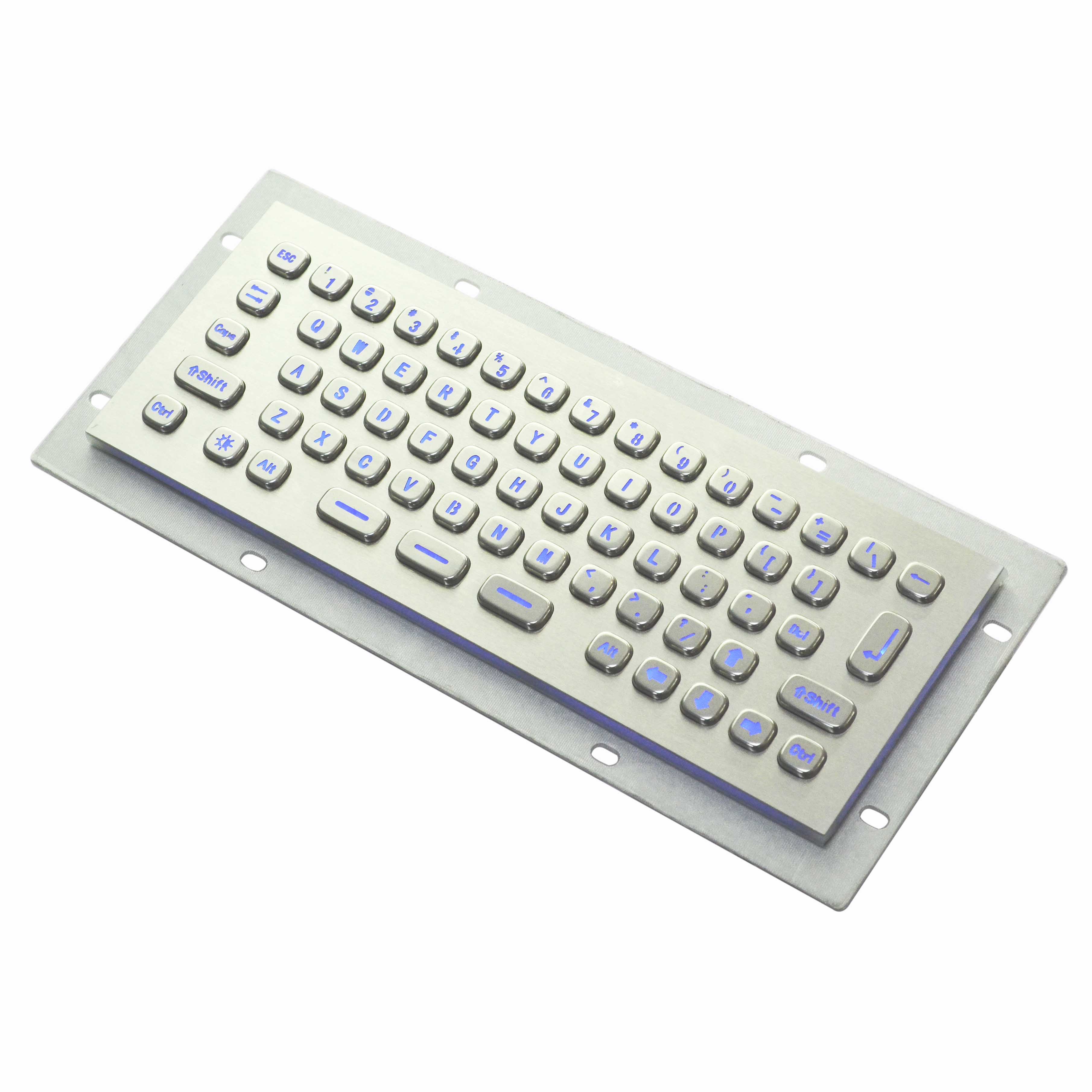
Braille Metal Keyboard: The Innovation and Future of Tactile Interaction
I. Evolution and Limitations of Traditional Braille Keyboards
As a core tool for visually impaired individuals to interact with the digital world, Braille keyboards have evolved from mechanical to electronic and lightweight designs. Traditional Braille keyboards, based on the Perkins-style structure, utilize 6–8 main keys to input Braille symbols. However, they suffer from bulky size (conventional keyboards weigh over 500g) and high costs45. Early models predominantly used plastic materials, which, while cost-effective, lacked durability, provided weak tactile feedback, and failed to meet portability requirements。
II. Breakthroughs in Metal Material Innovation
Recent technological advancements have introduced metal materials to Braille keyboard design, achieving significant improvements. For instance, the Tdot Braille Keyboard employs an aluminum alloy frame and a foldable structure, reducing weight to 59g and optimizing spatial efficiency with a T-shaped layout (width halved compared to traditional models)12. The advantages of metal materials include:
- Enhanced Tactility: The cold surface and fine texture of metal improve tactile recognition of Braille dots, reducing misinput rates;
- Structural Robustness: High-strength metal frames withstand frequent keystrokes, extending device lifespan;
- Aesthetic Integration: Modern metallic finishes replace the "medicalized" appearance of traditional assistive devices, boosting user acceptance.
III. User-Centric Functional Design
Braille keyboards are transitioning toward precision adaptation. For example, China’s first accessible Braille keyboard features a minimalist layout with 15 Braille-dot keys + 3 knobs, replacing redundant functions of traditional keyboards. This allows visually impaired users to input without memorizing complex key combinations46. Metal keys with magnetic adsorption design enable customizable Braille symbol arrangements for multilingual and multi-scenario needs1. High-end models integrate Bluetooth modules for real-time Braille-to-text conversion and enhance interaction through vibration feedback.
IV. Social Impact and Future Trends
The proliferation of Braille metal keyboards is transforming how visually impaired communities engage with technology. Future directions may include:
- Intelligent Integration: Combining AI voice assistants for seamless Braille-to-speech conversion;
- Modular Expansion: Detachable metal components to support specialized inputs (e.g., mathematical symbols);
- Cost Reduction: Scaling up production to lower metal processing costs25.
Features of Industrial waterproof keyboard
The advantages of metal keypad is a cost-effective option
Related Article