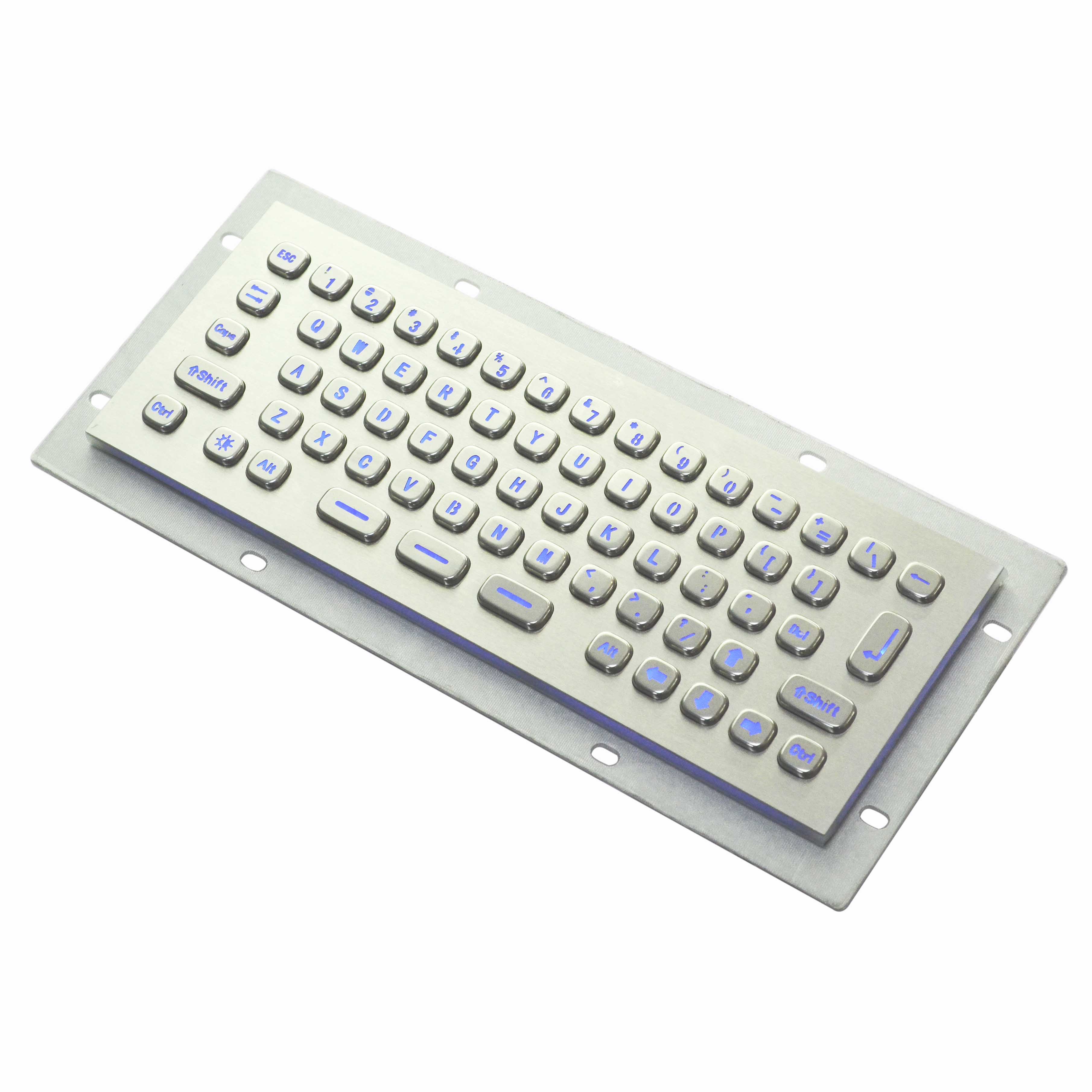
Differences Between Metal Braille Keyboards and Metal Non-Braille Keyboards
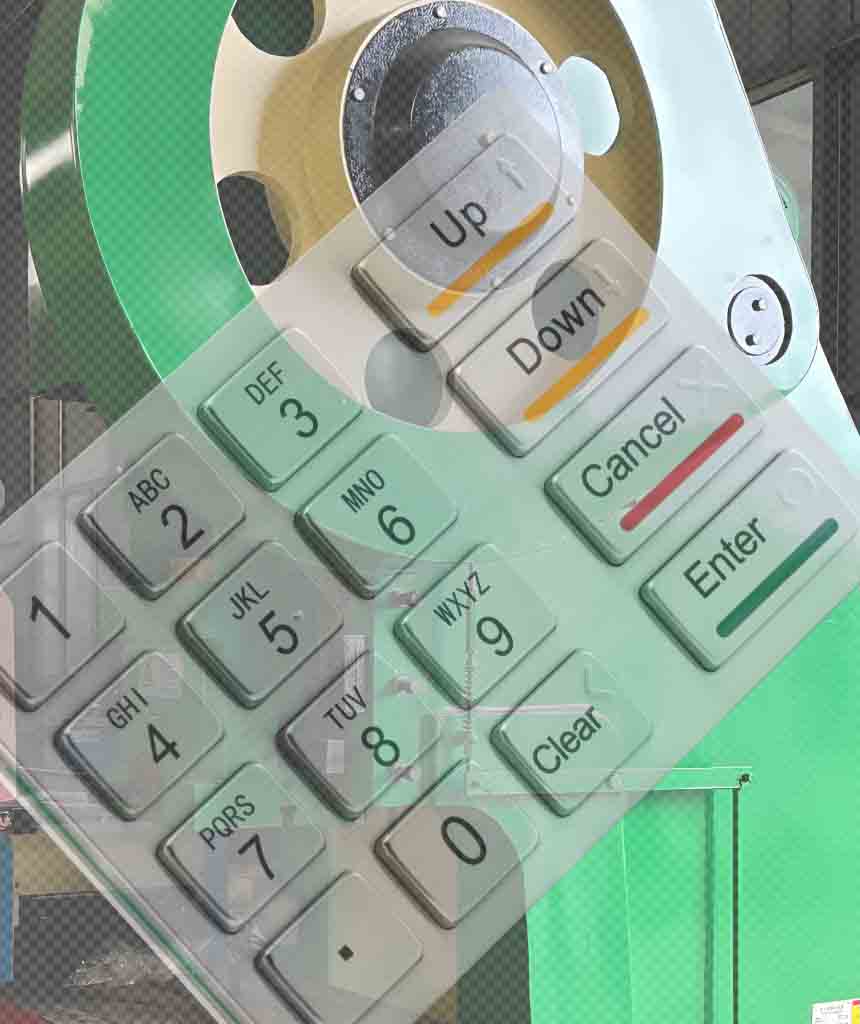
Same Material, Different Applications: An Analysis of Core Differences
Against the dual trends of industrial digitalization and upgraded accessibility in public services, metal keyboards have become the preferred input devices for industrial control, public terminals and special equipment due to their durability, damage resistance and adaptability to harsh environments. Although metal braille keyboards and metal non-braille keyboards share the same robust material properties, they differ essentially in design positioning, functional structure, target users and application scenarios. They correspond respectively to the two major fields of special accessibility needs and general industrial operation, serving precise usage scenarios.
Design Purpose: Accessibility-Oriented Design VS General Industrial Operation
The core design purpose of a metal braille keyboard is to serve as an accessible interaction tool specially built for visually impaired and low‑vision users, developed entirely around tactile recognition. Each key is equipped with standard, integrated laser‑engraved braille dots. The height, spacing and arrangement of the dots strictly comply with international braille standards and ergonomics. Visually impaired users can accurately identify keys by touch alone, completely independent of vision, achieving autonomous operation. Every detail is optimized for accessibility and convenience for special groups.
A metal non-braille keyboard focuses on meeting the general industrial operation needs of ordinary users, designed based on visual recognition. Only standard letters, numbers and functional symbols are printed or etched on the key surface, with no braille protrusions. Operation relies entirely on visual recognition. It emphasizes universal, convenient and efficient basic control without accessibility optimization for special groups.
Material and Craftsmanship: Same Material, Different Processing
Both keyboards are made of industrial-grade 304 stainless steel, featuring IP65 waterproof and dust proof protection, corrosion resistance, vandal resistance, wide temperature tolerance and exceptional durability in dusty, humid, oily or high-frequency usage environments, far exceeding ordinary plastic keyboards.
However, significant differences exist in craftsmanship:
Metal braille keyboards emphasize clear, durable tactile braille dots that never wear or fall off, with optimized key feedback for high-precision tactile operation.
Metal non-braille keyboards focus on clear, wear-resistant visual markings, simplified production costs and stable basic input, without additional tactile assistance structures.
Function and User Experience: Full Tactile Autonomous Operation VS Visual-Based Basic Input
Functionality represents the most critical distinction.
Metal braille keyboards, used with screen-reading software, support fully tactile, vision-free independent operation, with voice feedback, precise key recognition and accessible system compatibility. Visually impaired users can independently complete typing, equipment control and transaction processing, solving digital operation difficulties and preserving independence and dignity.
Metal non-braille keyboards only provide basic input functions, fully dependent on visual guidance, with no tactile assistance or voice support. They are user-friendly for ordinary people but unusable independently by the visually impaired, with simple functions limited to conventional industrial and office scenarios.
Application Scenarios: Accessible Public & Special Industry VS General Industry & Standard Terminals
Metal braille keyboards are mainly used in accessible public facilities and special industrial scenarios, including bank ATMs, self-service machines, transportation terminals, medical equipment, industrial control consoles and special education institutions. They are essential hardware for accessibility compliance and equal rights for visually impaired users.
Metal non-braille keyboards are widely applied in general industrial production, standard consoles, ordinary public terminals and industrial offices, suitable for environments without special accessibility requirements. They dominate the industrial keyboard market with high cost-performance and universal compatibility.
Industry insiders point out that although the two keyboards share the same material, they are positioned complementarily, filling the gaps in the specialized accessibility and general industrial markets. Metal braille keyboards embody humanistic care through accessible technology, while non-braille keyboards support the basic needs of industrial digitalization. Both will continue to upgrade independently, promoting the refined and diversified development of the industrial keyboard industry.
Backlight enhancement, practical upgrade: Exploring the core logic behind the backlight feature of the metal keyboard
The touchpad integrated silicone keyboard
Related Article