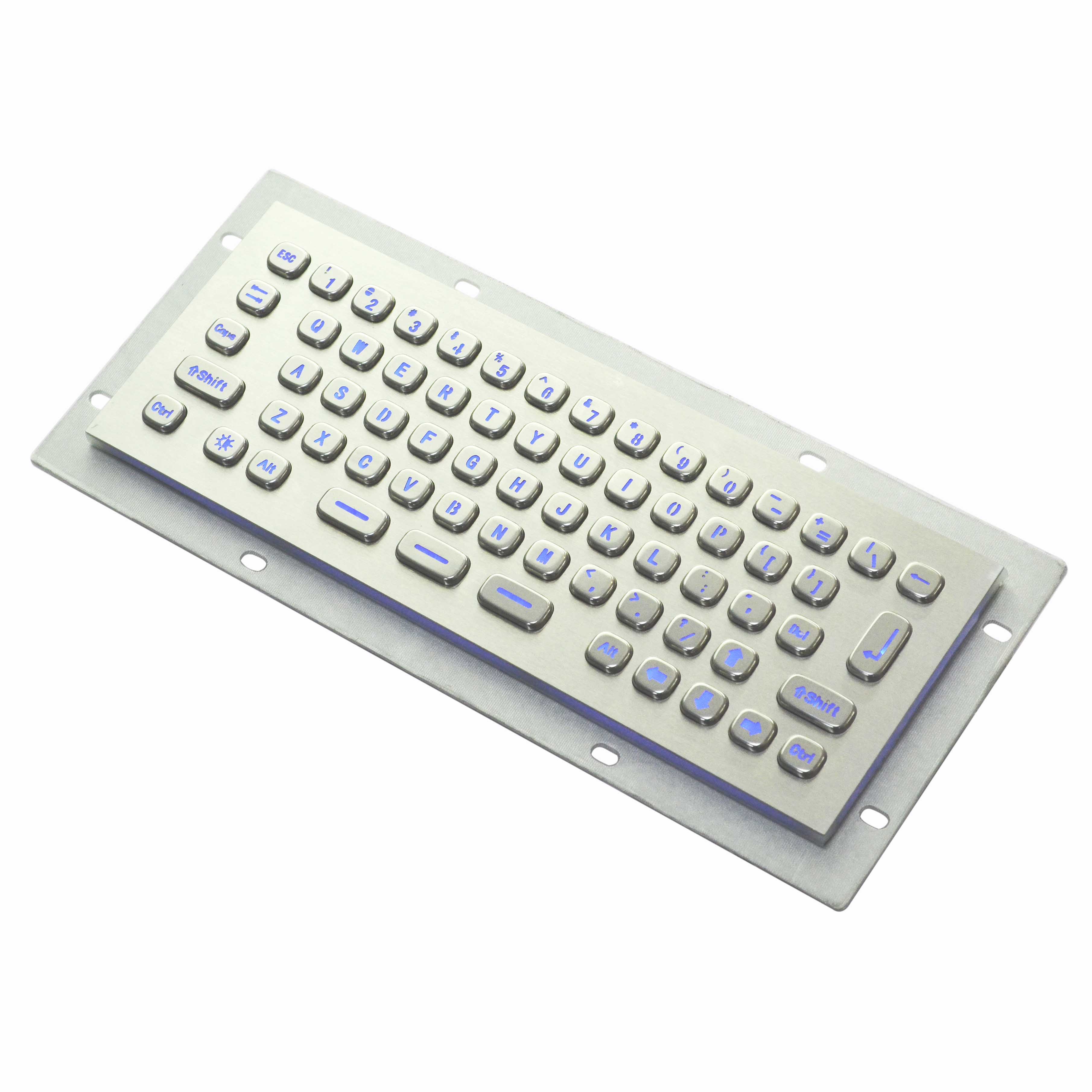
The differences between industrial keyboards and ordinary keyboards

Industrial keyboards and regular keyboards exhibit significant differences in design philosophy, usage scenarios, and performance characteristics. The following provides a detailed comparison across multiple dimensions:
I. Structural and Material Differences
Industrial Keyboards:
- Constructed with durable materials such as stainless steel frames, silicone gaskets, and polycarbonate panels
- Feature triple-layer protection design (silicone overlay + metal isolation mesh + PCB sealing coating)
- Some medical-grade products utilize antibacterial silicone materials with surface roughness controlled below Ra0.8μm
Regular Keyboards:
- Typically feature plastic casings and membrane structures
- Rely on three-layer membrane circuit boards for contact triggering
- Some mechanical keyboards incorporate independent mechanical switches (e.g., Cherry MX switches)
II. Protective Performance and Environmental Adaptability
Industrial Keyboards:
- Generally achieve IP65/IP67 protection ratings, with medical-grade models reaching IP69K
- Operating temperature range: -30℃ to 70℃, humidity tolerance: 0-95%
- Equipped with waterproof, dustproof, and explosion-proof capabilities, resistant to high-pressure steam cleaning
- Utilize optical isolation anti-interference technology to ensure operational reliability
Regular Keyboards:
- Lack special protection ratings
- Standard operating temperature: 0℃ to 40℃
- Not suitable for humid, dusty, or extreme temperature environments
III. Service Life and Durability
Industrial Keyboards:
- Key lifespan exceeds 10 million presses (Cherry MX industrial switch standard)
- German automotive factory tests show 73% reduction in equipment misoperation rates
- Can maintain stable operation for 2 years in continuous dust environments
Regular Keyboards:
- Membrane keyboards have approximately 5 million press lifespan
- Prone to key malfunction issues after prolonged use
- Rubber membranes tend to degrade, affecting tactile feel
IV. Special Features and Design
Industrial Keyboards:
- Equipped with anti-misoperation mechanical locks (requiring simultaneous pressing of unlock key + function key)
- Integrated professional modules (e.g., radiation dose detection for nuclear power plant control panels)
- 15° tilt angle and 2.5mm key travel optimize ergonomics
- Tactile feedback design accommodates operators wearing heavy gloves
Regular Keyboards:
- Some mechanical keyboards support 6-key rollover
- Optional backlighting and macro programming for gaming features
- Basic ergonomic designs
V. Application Scenarios
Industrial Keyboard Applications:
- Professional fields: power, defense, aviation, medical
- Harsh environments: petrochemical, machinery manufacturing
- High-frequency usage equipment: ATMs, self-service terminals
- Industries requiring hygiene standards: food processing, pharmaceuticals
Regular Keyboard Applications:
- Daily office and home use
- General programming and word processing
- Casual gaming entertainment
- Quiet environments: libraries, offices
VI. Price and Maintenance Costs
Industrial Keyboards:
- Higher pricing, typically 3-5 times that of regular keyboards
- Lower maintenance costs with extended service life
- Localized technical services can reduce procurement and maintenance costs by 30%-50%
Regular Keyboards:
- Affordable pricing, generally ranging from ¥50-200
- Mechanical keyboards are more expensive (¥200-2000)
- Shorter lifespan requiring more frequent replacement
Selection Recommendations
When choosing a keyboard, consider the following factors:
- Usage Environment: Extreme conditions necessitate industrial keyboards
- Usage Frequency: High-frequency operations recommend more durable industrial keyboards
- Budget Constraints: Regular applications may opt for more cost-effective membrane keyboards
- Special Requirements: Professional fields like medical or explosion-proof need specially designed keyboards
While industrial keyboards come at a higher price point, they offer irreplaceable advantages in reliability under harsh conditions, long-term cost-effectiveness, and specialized functionality. Regular keyboards are better suited for daily office and home use, offering affordability and portability.
The features of the mini joystick mouse
Advantages of Embedded Industrial Keyboards
Related Article